An infectious diseases specialist and a leading Morocco tour operator respond to new government travel advisories on leishmaniasis – and explain why most travelers are already better protected than they think.
IMMEDIATE RELEASE – Marrakech, May 2026
A Canadian government travel advisory has placed leishmaniasis back in the spotlight for travelers planning a trip to Morocco.
The Government of Canada's Morocco Travel Advice page was updated in March 2026 to flag the parasitic disease as a risk for visitors. The US government's Centers for Disease Control and Prevention also lists leishmaniasis among its Travel Health Notices for Morocco.
But infectious diseases specialist Dr James Knox says tourists should not be alarmed – and that most are already taking the primary prevention measure without realising it.
"While it's important for travelers to be aware of leishmaniasis and measures for its prevention, the risk for most travellers to Morocco is low," says Dr Knox, Director of Glide Online Travel Clinic.
Here, he shares five practical steps Morocco-bound visitors can take to reduce their risk further.
What is Leishmaniasis?
Leishmaniasis is a parasitic infection spread by sandfly bites, endemic to many tropical and subtropical regions including parts of North Africa.
The disease most commonly presents as cutaneous leishmaniasis – skin lesions that can leave permanent scarring.
A more severe form, visceral leishmaniasis, involves infection of the liver, spleen and bone marrow. But Dr Knox notes it accounts for a small minority of cases in Morocco.
“In Morocco, around 3% of cases are due to the more severe form of the disease called visceral leishmaniasis,” he says.Leishmaniasis remains
relatively rare among travelers, though Dr Knox notes reports suggest numbers may be increasing slightly.
“In Canada, the J.D. MacLean Centre for Tropical Diseases in Montréal saw 16 cases annually in 2018, compared with nine in 2008 – and only 10% of their patients between those years had been in North Africa,” he says.
Where is Leishmaniasis Present in Morocco?
“In recent decades, Taounate and Chefchaouen have seen higher rates of visceral leishmaniasis than other parts of Morocco,” Dr Knox says.
Researchers from Cadi Ayyad University in Marrakech have confirmed this. A paper published last month found that 80% of leishmaniasis cases in Morocco occurred in Al Hoceima, on the country’s northern Mediterranean coastline, with sporadic cases also reported in Taounate and Chefchaouen, also in the north.
Cases are extremely rare in the region around Marrakech, in central Morocco.
“Rather than avoiding travel to particular areas, the current advice from the Canadian Government and other public health authorities stresses preventive measures, including avoidance of sandfly bites, for all travellers,” Dr knox adds.
Asaf Peled, CEO of specialist Morocco tour operator The Morocco Luxury Tours, says most travelers won't likely come near the affected regions during a trip.
“Al Hoceima and Touanate are not popular destinations for international tourists,” he says. "Since 2020, we've never taken a travel group there."
Chefchaouen – famous for the striking, blue-washed buildings of its old town – does attract interest, but Peled says the logistics mean most never make the trip.
“Chefchaouen is in the far north of Morocco and it’s a seven to eight hour drive from Marrakech.” he says. “If you're not visiting the north of Morocco or you only have two weeks, then it's unlikely you'll visit Chefchaouen and therefore won’t be traveling to areas of risk."
Five Tips for Leishmaniasis Prevention in Morocco
1. Stay in air-conditioned accommodation
Choosing air-conditioned accommodation is one of the most effective ways to reduce sandfly exposure, as the insects struggle in cool, controlled environments.
Dr Knox says this single step significantly lowers risk — and for most travelers staying in hotels, it is already built into their trip.
"Travellers can reduce their risk by choosing air-conditioned accommodation," he said. "Using fans and other ventilation may also help to reduce the risk. "
2. Sleep off the ground and under a treated bed net
If air-conditioned accommodation is not available, Dr Knox advises sleeping "off the ground" and under a tightly woven, insecticide-treated bed net.
Sandflies are small enough to pass through standard mosquito nets, so a fine-mesh net treated with permethrin or a similar insecticide offers significantly better protection.
Using fans and other ventilation can also help deter sandflies, which are weak fliers and struggle in moving air.
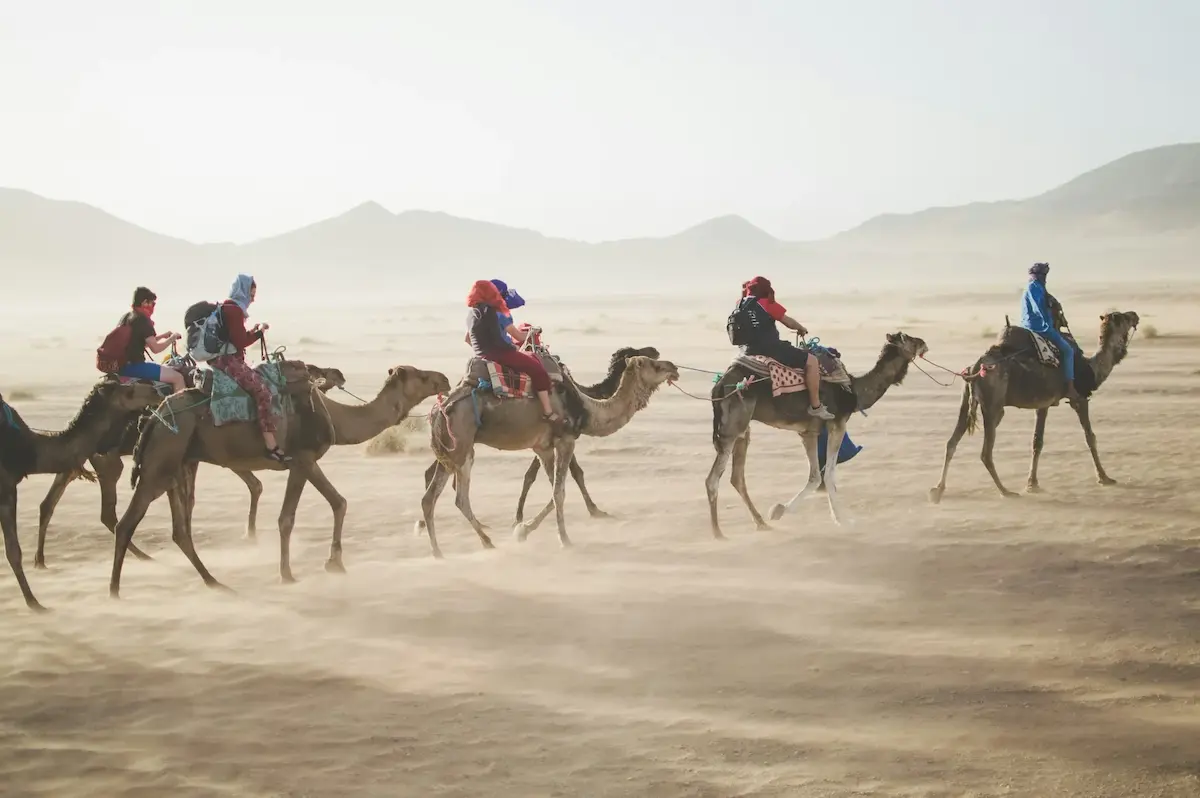
Peled added that most desert camping experiences in Morocco are already set up to prevent sandfly bites.
“Sahara desert experiences are popular, and we use tents that have air-conditioning and positioned well away from animal burrows,” he says.
He recommended travelers look for camping experiences where the accommodation is built on a cement floor, beds are raised off the ground, and you're protected from insects with fine nets.
3. Avoid outdoor activity from dusk to dawn
Sandflies are most active between sunset and sunrise, so Dr Knox recommends limiting outdoor exposure during those hours where possible.
"It's wise to avoid outdoor activities from sunset to sunrise, when sandflies are out," he says.
Travelers should be particularly cautious in rural areas, near vegetation, or close to animal burrows – all environments where sandfly populations tend to be higher.
4. Cover up and use insect repellent
When venturing out, travelers should wear long sleeves and long pants, and apply a DEET-based insect repellent to any exposed skin.
Sandflies are small enough to bite through thin fabric, so treating clothing with permethrin spray adds an additional layer of protection.
5. See a travel doctor before you go – and know the symptoms
Dr Knox recommends visiting a travel doctor six to eight weeks before departure for personalised advice on leishmaniasis and other preventive health measures.
Travelers should also be aware that symptoms can take months occasionally years – to develop after exposure.
"In the case of cutaneous leishmaniasis, these comprise non-healing ulcers and other skin lesions," he says. "For visceral leishmaniasis they include weight loss, fever, abdominal discomfort and lethargy."
Dr Knox recommended that if you experience any of these symptoms, you should seek medical care. He also recommends you see a travel doctor six to eight weeks before you go for personalized advice.
For further media enquiries, contact:
Asaf Peled, CEO, The Morocco Luxury Tours
info@themoroccoluxurytours.com
+212520505675
Dr James Knox, Director of Glide Online Travel Clinic.
info@glideonlinetravelclinic.com.au